
Good News: AI Isn’t Writing Police Reports in Roanoke. Bad News: Flock’s 24 AI Cameras Remain.
Here’s a piece of genuinely good news for Roanoke: no police department in the city is using AI to write police reports. Before celebrating too hard, let’s talk about what’s here, what was tried, and what it would take to roll any of it back.
What Draft One is
Axon, the company best known for Tasers and body cameras, sells a product called Draft One that turns body camera audio into a first draft of a police report. Officers are supposed to review mistakes and sign off before a draft becomes an official record. While it sounds like a time saver, independent research indicates it creates significant problems.
What the research found
Independent researchers put AI-written reports to a blind test where reviewers read a mix of AI-generated and human-written reports. Reviewers couldn’t tell them apart because the AI reports were indistinguishable. The same research revealed that AI-generated reports scored significantly worse on accuracy. You get reports that read convincingly despite containing errors that follow people into courtrooms, charging decisions, and criminal records.
What Axon says, and the human review problem
Axon responds that human oversight remains central because officers review every draft, correct mistakes, and approve final versions. The catch lies in the logic: if trained reviewers couldn’t spot AI reports in a blind test, a busy officer skimming a draft at the end of a shift is unlikely to catch AI-introduced errors. The safeguard falsely assumes human reviewers can spot what researchers couldn’t.
Flock in Roanoke
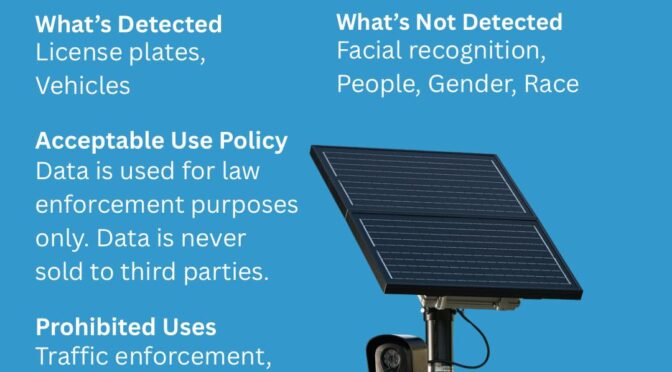
Roanoke doesn’t use Draft One, although the city does use AI in policing. The city runs 24 Flock AI-driven license plate readers that were still operating as of this writing (Oct 1, 2026). Flock’s system uses computer vision and machine learning to log license plates alongside vehicle details like make, model, and color to build searchable records of vehicle movements. Roanoke purges this data after 21 days. While these cameras remain active, Roanoke still doesn’t use AI like Draft One to write police reports.
The gunshot detectors that didn’t last
The city also tried Flock’s Raven gunshot detection system after City Council approved 75 detectors in April 2026. Out of 41 installed detectors, 30 ended up in wrong locations, leading council to vote unanimously in July 2026 to scrap the entire program. Roanoke tested one AI policing initiative and abandoned it within months.
The crime center
Unveiled in December 2025, ROC3 (the Roanoke Real-Time Crime Center) pulls feeds from over 1,000 city cameras and plate readers into a central room where analysts monitor them in real time. The city paid $4.35 million for the property, alongside $562,095.71 for supplies and equipment ($362,095.71 from grants and $200,000 from the general fund). ROC3 only operates Monday through Friday from 8 AM to 5 PM, even though WDBJ reported that every fatal city shooting that year occurred outside those operating hours.
How Roanoke compares
Roanoke isn’t an outlier, as a 2025 investigation found Flock cameras deployed in at least 28 Virginia municipalities, including over 600 in Hampton Roads and 216 in Norfolk. While Lynchburg paused its 15 readers in August 2026, Roanoke kept its cameras active. Regarding Draft One, a Virginia DCJS Operation Ceasefire grant memo shows Mathews County applied for funding while Roanoke didn’t. Roanoke City requested $198,900 for Cellebrite Premium, FlockOS, and Tip411, receiving $0 after failing to meet criteria. Roanoke County received $98,550 for a mobile scanner and forensic laptops, while local police confirmed in January 2026 that they weren’t using AI directly.
What it would take to remove Flock
Because Roanoke’s Flock contract isn’t public, standard agreement terms apply. Section 6.2 allows termination for convenience, letting the city end the contract without proving fault for a $500 fee per camera, totaling about $12,000 for 24 cameras. For comparison, El Paso, Texas ordered its cameras removed in September 2026 and completed removal within roughly 30 days. Local removal would require a council vote, which remains plausible since council unanimously killed the Raven program and three candidates oppose the cameras ahead of the November 3 election.
The bottom line
Roanoke doesn’t use Draft One or AI-written police reports, having already scrapped its AI gunshot detection program. This outcome wasn’t from a lack of interest, considering the city sought FlockOS funding, approved 75 Raven detectors, and spent $4.35 million on ROC3 to aggregate over 1,000 camera feeds. Nevertheless, Flock’s 24 AI-assisted plate readers were still operating as of this writing (Oct 1, 2026).
Sources
- ACLU Research on Draft One
- Virginia DCJS Operation Ceasefire Grant Memo
- WDBJ Report on AI in Local Law Enforcement (Jan. 7, 2026)
- WDBJ Report on ROC3 Funding and Staffing (March 11, 2026)
- WSLS Report on ROC3 Unveiling (Dec. 12, 2025)
- WSLS Coverage on the Flock Debate Across Southwest Virginia (Aug. 21, 2026)
- WHRO/VCIJ Investigation into Virginia’s Flock Network (July 3, 2025)
- Williamsburg Independent Report on Hampton Roads Camera Counts
- MDPI Study: “Surveilling the Commonwealth” (May 13, 2026)
- Flock Standard Agreement Section 6.2 (via Englewood, CO)
- El Paso Times Report on Flock Removal (Sept. 15, 2026)
- GovTech Coverage on Roanoke Flock Community Meeting