

Nature vists
Rick Moranis sings

Nature vists
Rick Moranis sings
Here’s a piece of genuinely good news for Roanoke: no police department in the city is using AI to write police reports. Before celebrating too hard, let’s talk about what’s here, what was tried, and what it would take to roll any of it back.
Axon, the company best known for Tasers and body cameras, sells a product called Draft One that turns body camera audio into a first draft of a police report. Officers are supposed to review mistakes and sign off before a draft becomes an official record. While it sounds like a time saver, independent research indicates it creates significant problems.
Independent researchers put AI-written reports to a blind test where reviewers read a mix of AI-generated and human-written reports. Reviewers couldn’t tell them apart because the AI reports were indistinguishable. The same research revealed that AI-generated reports scored significantly worse on accuracy. You get reports that read convincingly despite containing errors that follow people into courtrooms, charging decisions, and criminal records.
Axon responds that human oversight remains central because officers review every draft, correct mistakes, and approve final versions. The catch lies in the logic: if trained reviewers couldn’t spot AI reports in a blind test, a busy officer skimming a draft at the end of a shift is unlikely to catch AI-introduced errors. The safeguard falsely assumes human reviewers can spot what researchers couldn’t.
Roanoke doesn’t use Draft One, although the city does use AI in policing. The city runs 24 Flock AI-driven license plate readers that were still operating as of this writing (Oct 1, 2026). Flock’s system uses computer vision and machine learning to log license plates alongside vehicle details like make, model, and color to build searchable records of vehicle movements. Roanoke purges this data after 21 days. While these cameras remain active, Roanoke still doesn’t use AI like Draft One to write police reports.
The city also tried Flock’s Raven gunshot detection system after City Council approved 75 detectors in April 2026. Out of 41 installed detectors, 30 ended up in wrong locations, leading council to vote unanimously in July 2026 to scrap the entire program. Roanoke tested one AI policing initiative and abandoned it within months.
Unveiled in December 2025, ROC3 (the Roanoke Real-Time Crime Center) pulls feeds from over 1,000 city cameras and plate readers into a central room where analysts monitor them in real time. The city paid $4.35 million for the property, alongside $562,095.71 for supplies and equipment ($362,095.71 from grants and $200,000 from the general fund). ROC3 only operates Monday through Friday from 8 AM to 5 PM, even though WDBJ reported that every fatal city shooting that year occurred outside those operating hours.
Roanoke isn’t an outlier, as a 2025 investigation found Flock cameras deployed in at least 28 Virginia municipalities, including over 600 in Hampton Roads and 216 in Norfolk. While Lynchburg paused its 15 readers in August 2026, Roanoke kept its cameras active. Regarding Draft One, a Virginia DCJS Operation Ceasefire grant memo shows Mathews County applied for funding while Roanoke didn’t. Roanoke City requested $198,900 for Cellebrite Premium, FlockOS, and Tip411, receiving $0 after failing to meet criteria. Roanoke County received $98,550 for a mobile scanner and forensic laptops, while local police confirmed in January 2026 that they weren’t using AI directly.
Because Roanoke’s Flock contract isn’t public, standard agreement terms apply. Section 6.2 allows termination for convenience, letting the city end the contract without proving fault for a $500 fee per camera, totaling about $12,000 for 24 cameras. For comparison, El Paso, Texas ordered its cameras removed in September 2026 and completed removal within roughly 30 days. Local removal would require a council vote, which remains plausible since council unanimously killed the Raven program and three candidates oppose the cameras ahead of the November 3 election.
Roanoke doesn’t use Draft One or AI-written police reports, having already scrapped its AI gunshot detection program. This outcome wasn’t from a lack of interest, considering the city sought FlockOS funding, approved 75 Raven detectors, and spent $4.35 million on ROC3 to aggregate over 1,000 camera feeds. Nevertheless, Flock’s 24 AI-assisted plate readers were still operating as of this writing (Oct 1, 2026).
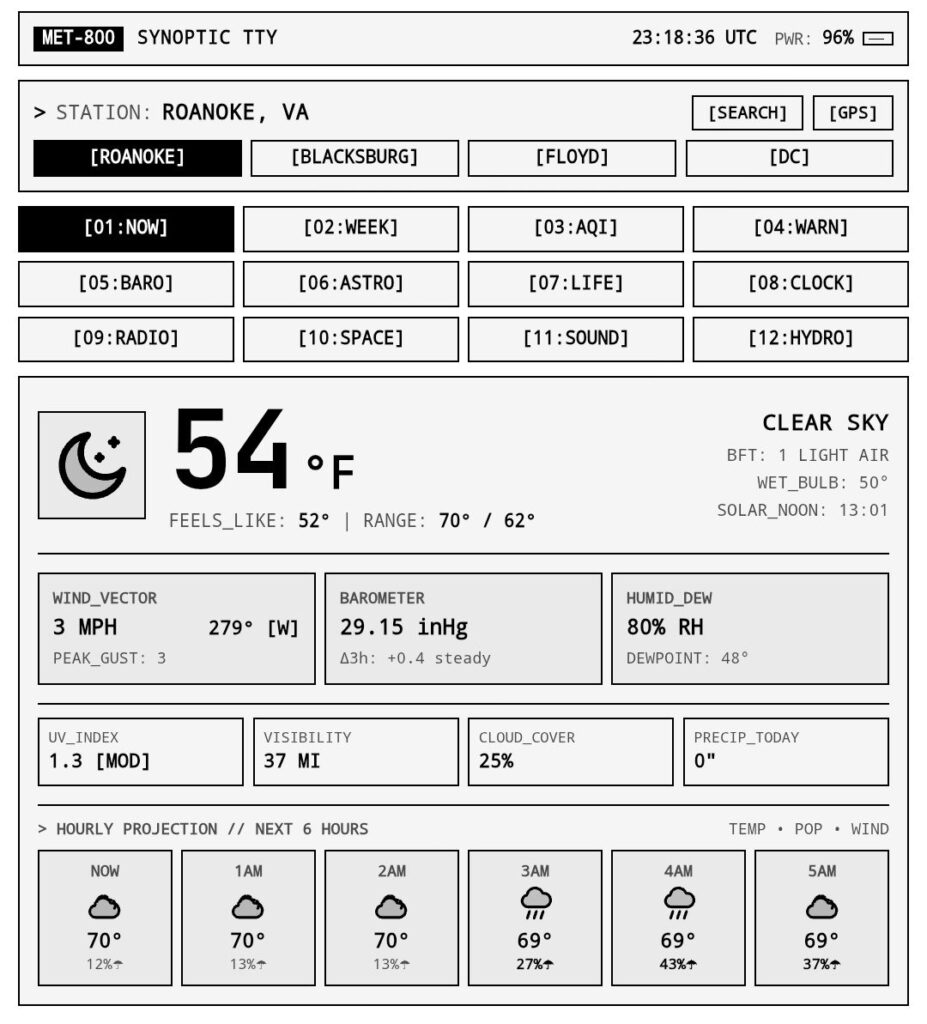
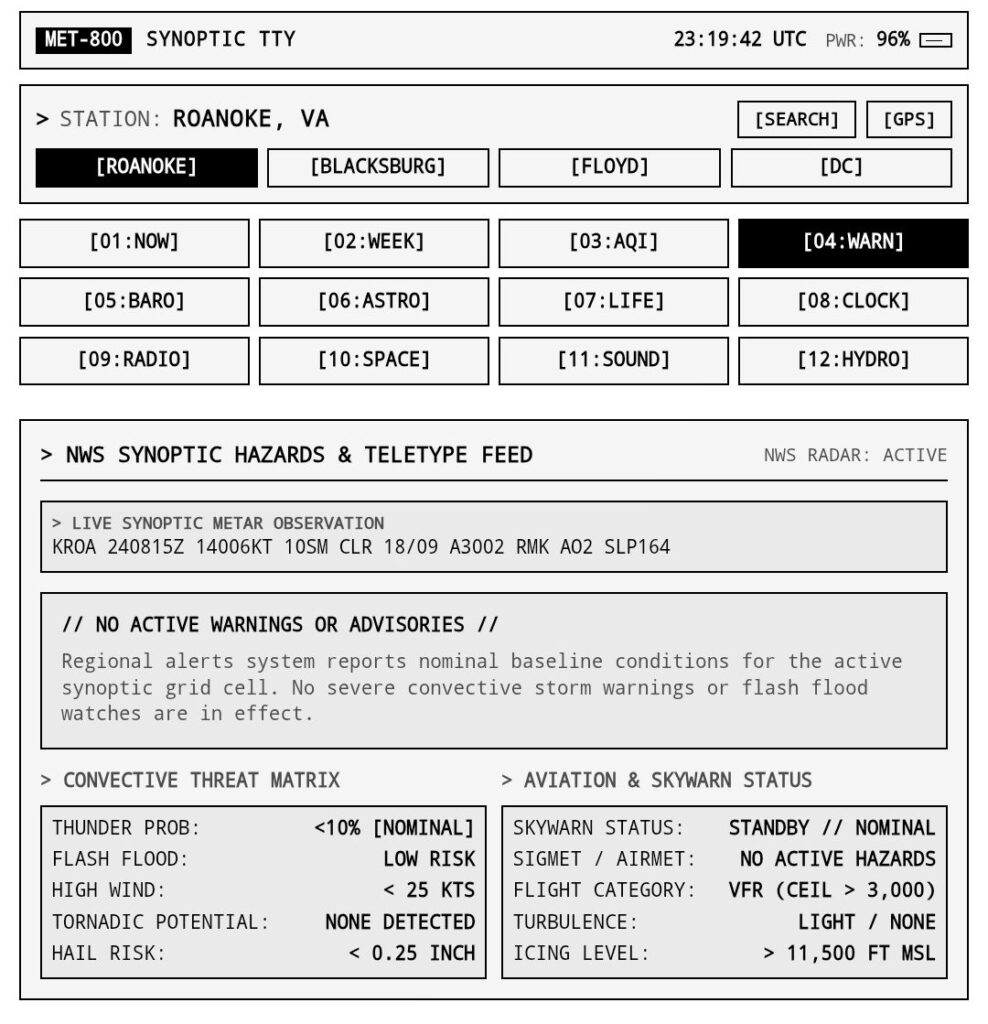
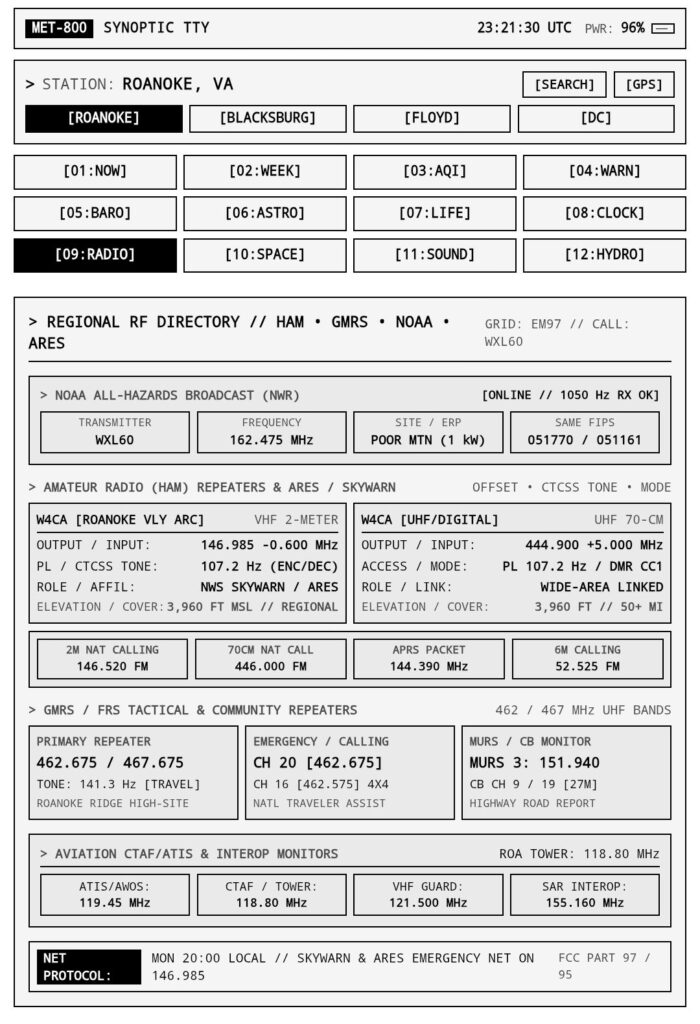
Opened out of scrolling elements, added some local hobby radio info pull.
https://svonberg.org/wp-content/uploads/2026/09/weather-003.html

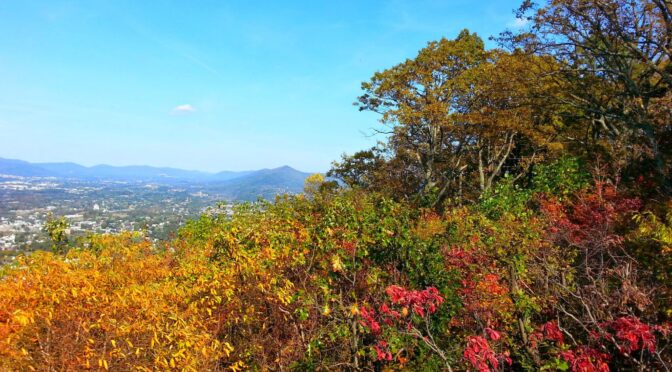
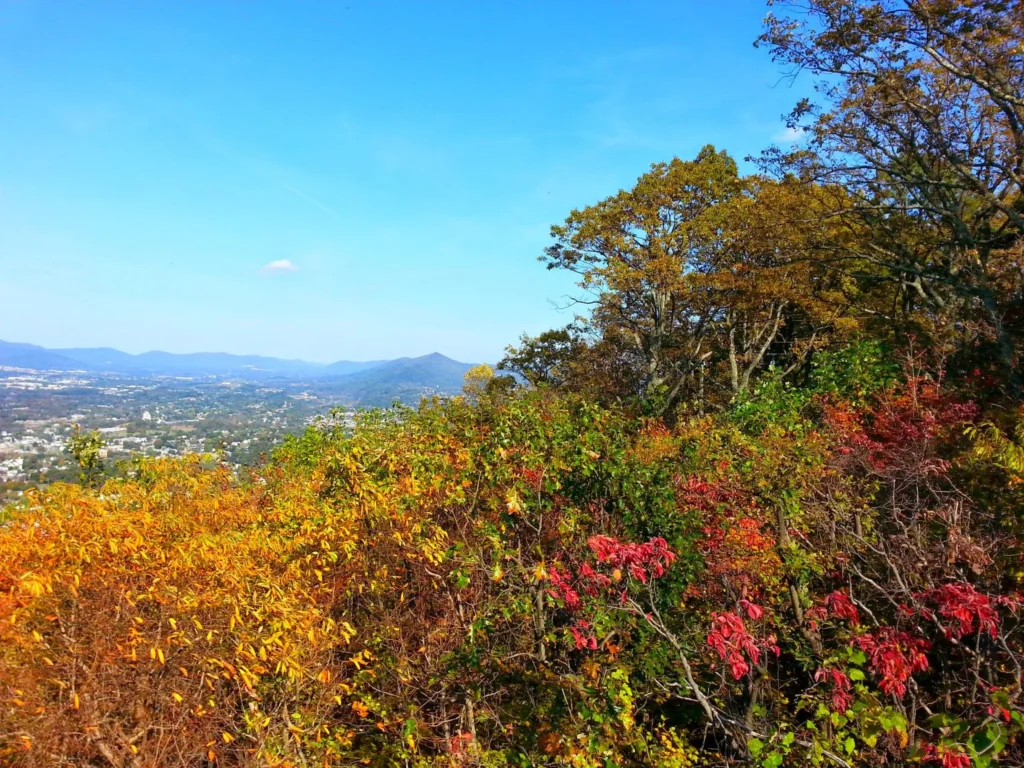
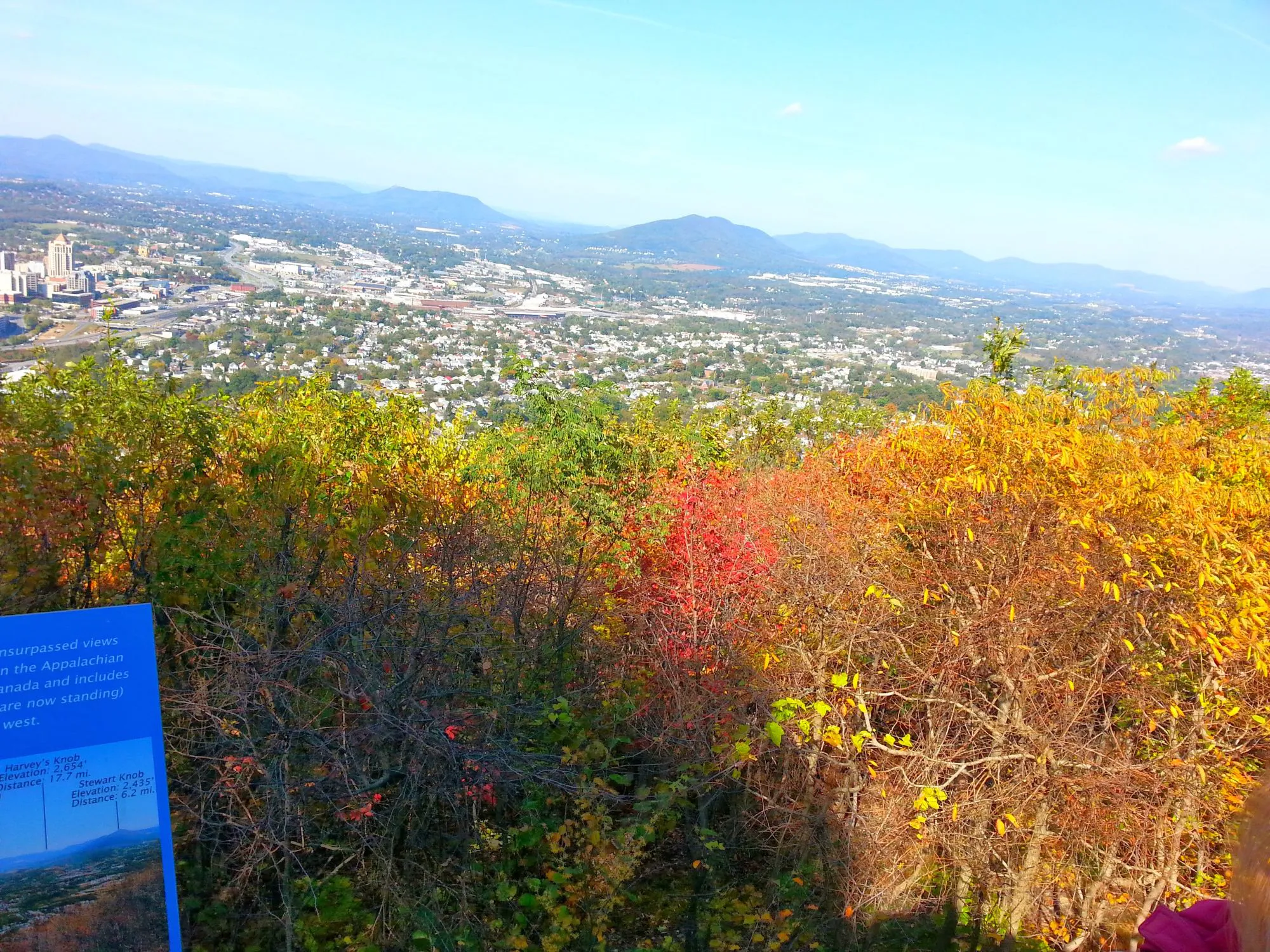
You can feel it turning now; the light comes in lower, the mornings have an edge, and the crickets sound like they’re running out of things to say.
Fall doesn’t hit the valley all at once; it leaks in through the edges: a yellow leaf here, a cold porch rail there.
I’m ready for it.
Give me the cool air, the foggy mornings, the ridge going gold. Bring it on.
What’s the first sign of fall you always notice, dear journal?
I took the CR-V in this morning to get it ready for the DC trip next week: AC check, a general roadworthy once-over, and getting the headlights redone. There is something satisfying about clear headlights before a long drive.
BHK is heading up for work. There might be an extra day tacked on to help the craft gang; we’ll see if that survives contact with the calendar.
Tomorrow the WVRIFA carousel goes live at noon. October 16, 10:00 AM, Roanoke Regional Partnership. The Wood Haven sale is not final yet, so this is the one to show up for.
Clearview Dynamics LLC has agreed to purchase the roughly 94-acre Wood Haven Technology Park property in Roanoke County, though the deal is not yet final.
A data-center site, a failed Prologis deal, and a newly formed LLC converge in less than four years.
2023
WVRIFA hires Prologis to market Wood Haven for data-center development. Potential customers identified in public records include Meta, Google, Amazon/AWS, Microsoft and Nvidia.
2025
Prologis pursues Project DCROA, a proposed 300-megawatt, five-building data-center campus for a confidential tenant.
January 13, 2026
Clearview Dynamics LLC is formed in Delaware while the Prologis deal remains active.
April 1, 2026
WVRIFA terminates the Prologis agreement after required conditions are not satisfied.
May 2026
Clearview registers in Virginia. Its paperwork is signed by Pamela Gregorski, a senior manager at Corporation Service Company (CSC).
September 11, 2026
WVRIFA enters a purchase agreement with Clearview for Wood Haven.
The chronology does not establish a connection between Clearview and Project DCROA, but it puts them in the same corporate and development timeline—and raises a central question: Is Clearview a new project or a new corporate vehicle for an old one?
Pamela Gregorski
→ Corporation Service Company (CSC)
→ Clearview Dynamics LLC
→ Wood Haven Technology Park
Gregorski also appears in public records involving:
Public records connect these companies to data-center projects in those states. Several of those projects have subsequently been publicly associated with Meta.
That pattern does not establish common ownership, but it provides a reason to examine Clearview’s deeper corporate and transaction records.
The most important records are the Clearview purchase agreement, corporate filings, financing documents, utility agreements and any records connecting Clearview to Project DCROA.
Those documents could show whether Clearview represents a continuation of the earlier development or an entirely separate project.
What sits behind Clearview Dynamics?
TL;DR
Clearview Dynamics LLC is a newly formed Delaware company that has agreed to buy Roanoke County’s roughly 94-acre Wood Haven Technology Park.
The timing is notable: the site was marketed for data centers, Prologis pursued a proposed 300-MW data-center campus, and Clearview was formed in Delaware while that deal was still active.
Clearview’s Virginia paperwork was signed by Pamela Gregorski, whose name also appears in records for several LLCs involved in data-center projects, including companies later publicly associated with Meta.
There is no public evidence yet proving Clearview is owned by Meta or connected to the earlier Prologis project.
The key unanswered question is whether Clearview represents a new development or a continuation of the earlier one under a new corporate entity.
I asked a lawyer friend “What possible legitimate reason could Roanoke County have to allow for an NDA?, re:this situation
This is what the lawyer told me-
“In municipal economic development, nondisclosure agreements are standard practice primarily to prevent real estate speculation and protect corporate strategy. If a major company publicly announces its plans too early, neighboring property owners will often skyrocket their asking prices for necessary adjacent land, road rights of way, or utility easements.
Additionally, the anonymity keeps competitors from discovering a company’s expansion plans or aggressively bidding against them for local resources and contractor labor.
Furthermore, keeping negotiations confidential protects both the local government and the business while they hammer out complex tax incentives and infrastructure agreements. State laws, including Virginia’s Freedom of Information Act, specifically allow for this secrecy. If a municipality could not guarantee confidentiality during early negotiations, businesses would simply take their projects, along with the potential tax revenue and jobs, to a state that would.”
So- Long story short, NDAs are used to stop local property owners from instantly raising real estate prices and to keep competitors from sabotaging the company’s expansion plans. They give the city and the business a safe, legally protected space to negotiate complex tax deals and infrastructure needs before going public.
Still stinks to me, though.
Rain all evening.
The kind of rain that turns the Blue Ridge into a dark smudge beyond the window. I’ve been listening to Old Gods of Appalachia while watching the ridgeline disappear and reappear through the weather, and it got me thinking about how closely the fictional world of the podcast sometimes seems to echo the history and geography of Roanoke, Virginia, my current stomping grounds.
There is an uncomfortable familiarity to the show’s treatment of Appalachian industry. Its stories of railroads, coal, corporate power, family fortunes, and ancient things lurking beneath the mountains take the real history of Appalachia and push it into the realm of cosmic horror. The fictional Locke family and the tragic Benji Rigg inhabit an alternate Appalachia, but the landscape underneath their stories feels remarkably familiar.
Roanoke doesn’t need much embellishment to serve as a backdrop for that kind of story. The city was built around the railroad, grew rapidly during the industrial boom, and accumulated the kind of wealth and architecture associated with the Gilded Age. Its history is literally embedded in the landscape.
So I decided to see what would happen if I stopped treating the similarities as an impression and put them on an actual map.
I wasn’t looking for exact one-to-one equivalents. Penderyn isn’t secretly sitting somewhere outside Roanoke, and there isn’t a real Furnace beneath Mill Mountain. Instead, I wanted to identify places where the fictional geography and the real geography seem to jibe.
The first point on the map was the historic Virginian Railway Station on South Jefferson Street.
That is an obvious place to begin with Benji Rigg. His story is intertwined with railroad tracks, stations, yards, and the sprawling machinery of the Locke Railroad Company. Roanoke’s own history is inseparable from the railroad. Norfolk and Western transformed the city from a small settlement into an important industrial and transportation center, and for generations the railroad influenced virtually every aspect of life here.
The old station provides an especially evocative physical reminder of that history. On a rainy evening, surrounded by brick, steel, wet pavement, and the dark outline of the mountains, it is easy to understand why railroads work so well as the setting for Appalachian horror. The whistle of a distant train doesn’t require much imagination to become something more ominous.
From there, the map moves downtown to the old Norfolk and Western General Office Buildings.
These buildings provide a useful real-world counterpart to the administrative power represented by the fictional Locke empire. Their imposing brick facades convey the scale of an organization that could influence an entire city and reach far beyond it. A railroad empire was not simply trains and tracks. It was land, labor, money, housing, commerce, and an enormous bureaucratic structure capable of turning individual lives into numbers on a ledger.
The old rail yard areas become another point on the map, connecting the physical machinery of the railroad with the offices where decisions were made.
From there, the map naturally leads to the places where the wealth generated by that industrial expansion became visible.
The Hotel Roanoke is one obvious stop. Built during the city’s railroad boom, it represents the other side of the industrial story: the hotels, meetings, social connections, and accumulated wealth that accompanied the growth of the railroad economy.
Old Southwest provides another useful piece of the puzzle. Its historic homes and Victorian architecture offer a glimpse of the prosperity that developed during Roanoke’s period of rapid expansion. It isn’t Penderyn, and there is no reason to pretend that it is. But if Penderyn represents the way great fortunes can conceal something darker beneath their polished surfaces, Old Southwest provides a real architectural reminder of what those fortunes looked like above ground.
Then the map turns toward Mill Mountain.
This is where the comparison becomes more geological than historical.
The Furnace beneath Penderyn is fictional, but the idea of a hidden world beneath the surface isn’t particularly difficult to imagine in the Roanoke Valley. The region’s geology includes karst limestone, with caves, fissures, underground drainage, and other features created by the slow movement of water through soluble rock.
The ground here is not always as solid or as simple as it appears.
Mill Mountain makes an especially effective landmark for this imagined geography. Sitting within the city itself, it provides a physical center around which much of Roanoke’s landscape can be understood. From Mill Mountain Park and the Roanoke Star, the relationship between the city, the railroad corridors, the surrounding neighborhoods, and the mountains becomes immediately visible.
On a clear day, it is simply a spectacular view.
On a rainy evening, when clouds settle into the valley and the lights of the city appear beneath them, the mountain can take on a different character. It becomes easy to imagine it as something old and patient, watching everything built around it.
The map doesn’t stop at the city limits.
Following the same progression that appears so often in Appalachian stories, it eventually moves away from the developed landscape and toward the woods. That means heading toward Salem, Dutch Oven Road, and the Hanging Rock area.
The Hanging Rock Battlefield Trail is particularly well suited to the atmosphere. The combination of rocky terrain, water, old stone, dense trees, and relative quiet creates a landscape that feels distinctly Appalachian. It is the sort of place where the transition between civilization and wilderness becomes noticeable.
That transition is important to the stories.
Cities have boundaries. Property has boundaries. Companies have boundaries. The woods don’t recognize any of them.
By the time the fictional world reaches those kinds of places, the authority of people and institutions begins to feel increasingly irrelevant. Money cannot buy the mountains. A railroad cannot impose a timetable on the forest. A deed cannot tell the things living beyond its boundary where they are allowed to go.
That is where the real geography and the fictional horror begin to overlap most effectively.
By the time I finished placing the points, the route on the map looked almost like a rough outline of the story:
Virginian Railway Station → Norfolk & Western General Offices → old rail yards → Hotel Roanoke → Old Southwest → Mill Mountain → Salem → Hanging Rock
It isn’t a map of Old Gods of Appalachia. It isn’t evidence that the fictional locations were based on Roanoke.
It’s a map of Roanoke itself, and that’s what makes it interesting to me.
The railroad is real. The industrial fortunes are real. The old corporate buildings are real. The houses built during the city’s boom are real. The mountain is real. The limestone is real. The woods are real.
The fictional stories simply rearrange those ingredients and ask what might happen if the darkness beneath them were literal.
Perhaps that’s one of the reasons Appalachian horror works so well. It doesn’t have to invent an entirely unfamiliar landscape. It can take places that already have complicated histories and simply change the way we look at them.
Tonight, the rain has swallowed most of the Blue Ridge. Mill Mountain is barely visible through the window, just a dark shape behind the lights of the city. Somewhere beyond it, the railroad is still running through the valley.
On the map, the locations are just pins.
In reality, they are streets, buildings, neighborhoods, mountains, trails, and woods.
All of them sitting on the same ground, and that leaves one unsettling thought behind.
Maybe the frightening part isn’t imagining that something ancient is hiding beneath Roanoke.
Maybe it’s realizing that if something were down there, we wouldn’t have built the city around it – we would have built the city directly on top of it.
Current Mood: Watching the mountains disappear in the rain.
Current Music: Old Gods of Appalachia
(A Brush Mountain Tale)
There’s a ridge above Catawba folks don’t linger on. Brush Mountain, long and dark, the kind of rise that carries a weight in its bones. The old timers say a mountain is like a hound… feed it once, and it’ll never stop coming back. But when you feed it blood, you’ve made a pact you can’t unmake.
In May of 1971, a small plane cut through the clouds over that ridge. In it was Audie Murphy, soldier, actor, hero; a man who carried more medals than his coat could bear, a man who walked through fire overseas and came out breathing when others did not. Folks liked to say he had death by the collar. But on that fog-thick morning, Brush Mountain decided otherwise. The plane hit the slope hard, tore open trees, and burned hot enough to scorch the stones. All aboard were gone in a heartbeat.
The sheriff’s men hauled what they could out, but the mountain kept the rest. Kept the smoke, kept the screams, kept the shadow of it all.
—
Porch Talk
Years later, if you sat on Cal Dempsey’s porch of an evening, he’d tell it plain.
“Brush Mountain ain’t right,” he’d say, rocking slow, his lantern throwing shadows across the boards. “That ridge pulled Murphy down same as a snapping turtle pulls under a duck. Weren’t no accident. Mountain drew in breath, filled the air with fog, and swallowed him whole.”
Somebody would laugh, usually a young’un visiting from town. Cal would just spit and shake his head. “You think I’m telling jokes? Ask the hunter heard an engine coughin’ overhead on a clear night, no plane in sight. Ask the woman seen a row of soldiers in the mist, marchin’ quiet along the slope, uniforms gray as ashes, and then*poof* gone into the brush. Ask the boys who dared each other to sleep by the memorial stone. Not one lasted till midnight. Said the ground was too restless, like it wanted to roll over under ‘em.”
Sunday started well with a breakfast of egg, veggie sausage, and cheese on maple biscuits, which was honestly better than a McGriddle. We are having the house AC inspected this morning. Afterward, I plan to visit a new mechanic named Jarl. On our ride home Saturday, the yellow check engine light came on… I hoped that tightening the gas cap would fix it, but it didn’t. Hopefully, Jarl can resolve the issue, and I also want to explore upgrading our headlights for better visibility.
Speaking of Saturday, we had a pretty successful outing for gathering little treasures. We picked up some cute stickers and four mystery date books: James, God of the Woods, Life Cycle of the Common Octopus, and From Blood and Ash. We also grabbed a bunch of craft supplies, including some wooden pieces to paint, craft yarn, and tiny watercolor paint sets.
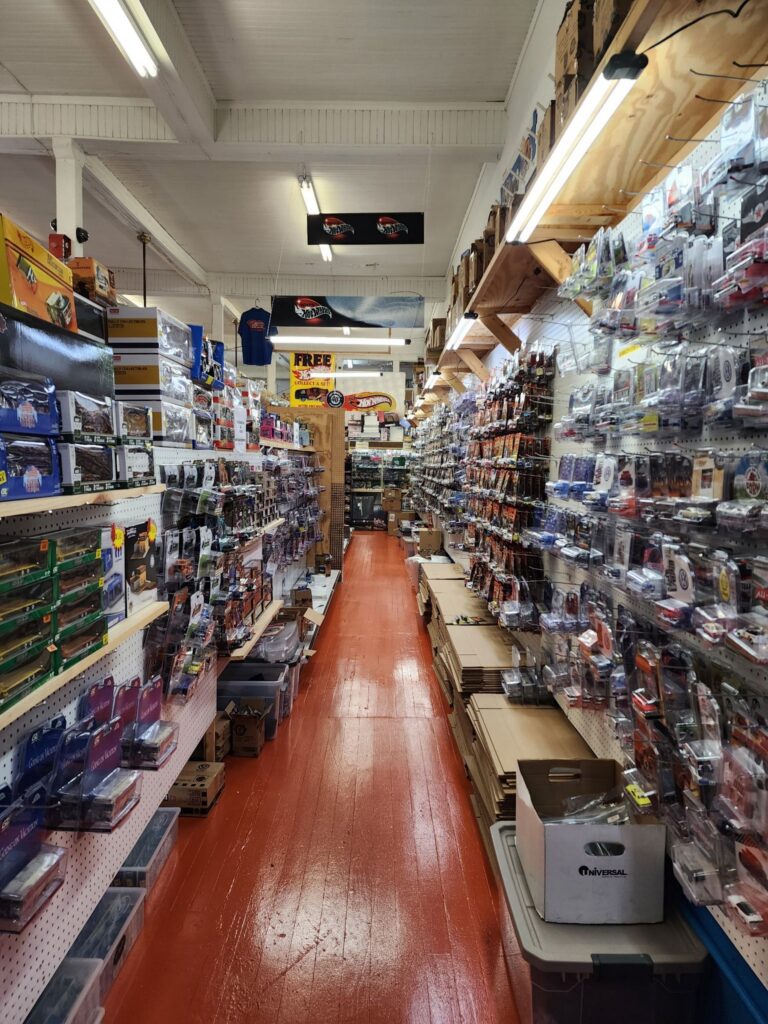
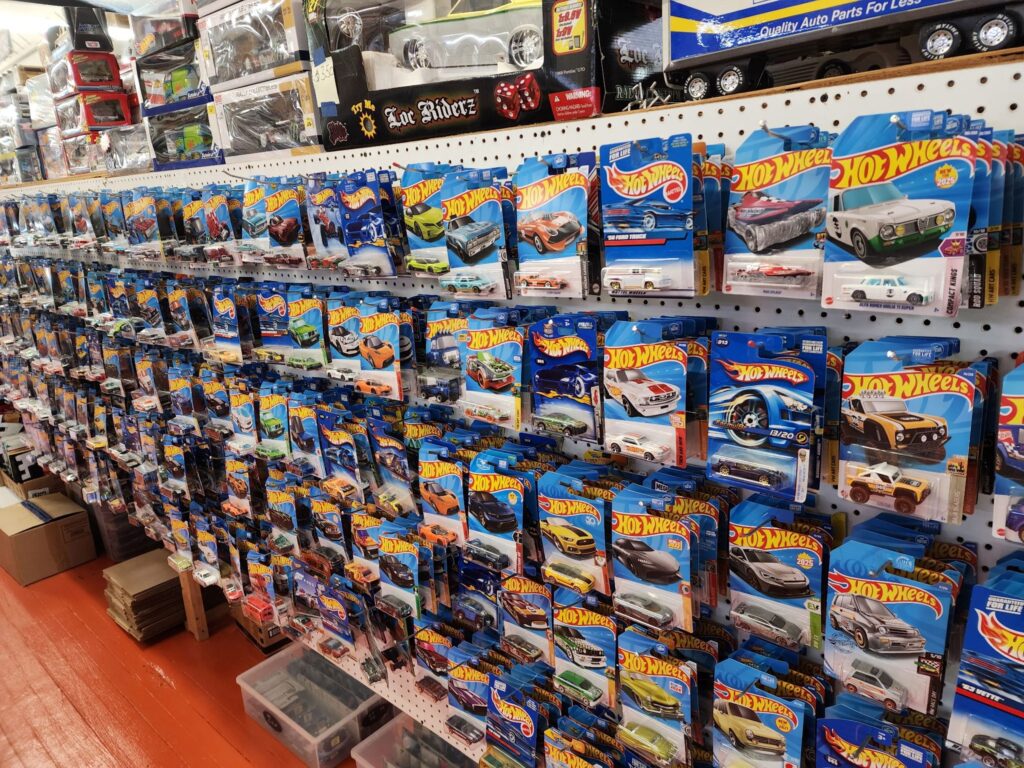
Along with an autumn puzzle and some treasures for friends, I found some great Matchbox cars. I picked up three art cars, specifically two ’57 Chevys, with letters all over them and a smashed-up Mondrian design. I also grabbed a lucky cat, a hot dog, and a sushi car, which were all picked out for BHK. While we were out and about, we managed to spot a red, white, and blue train all painted up for America’s 250th.
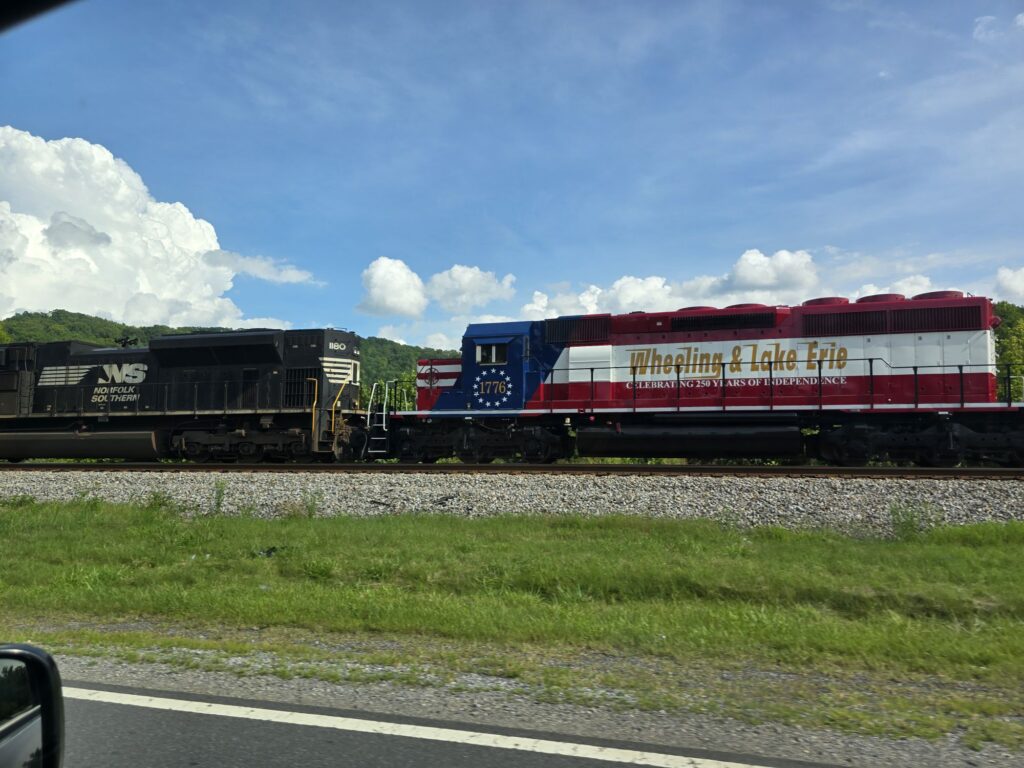
Tonight, we are keeping dinner simple with quesadillas. For screen time, we will be polishing off Nautilus since we have one episode left. It was a cute, albeit non-canon, diversion for 10 episodes.
Looks like a bomb went off!
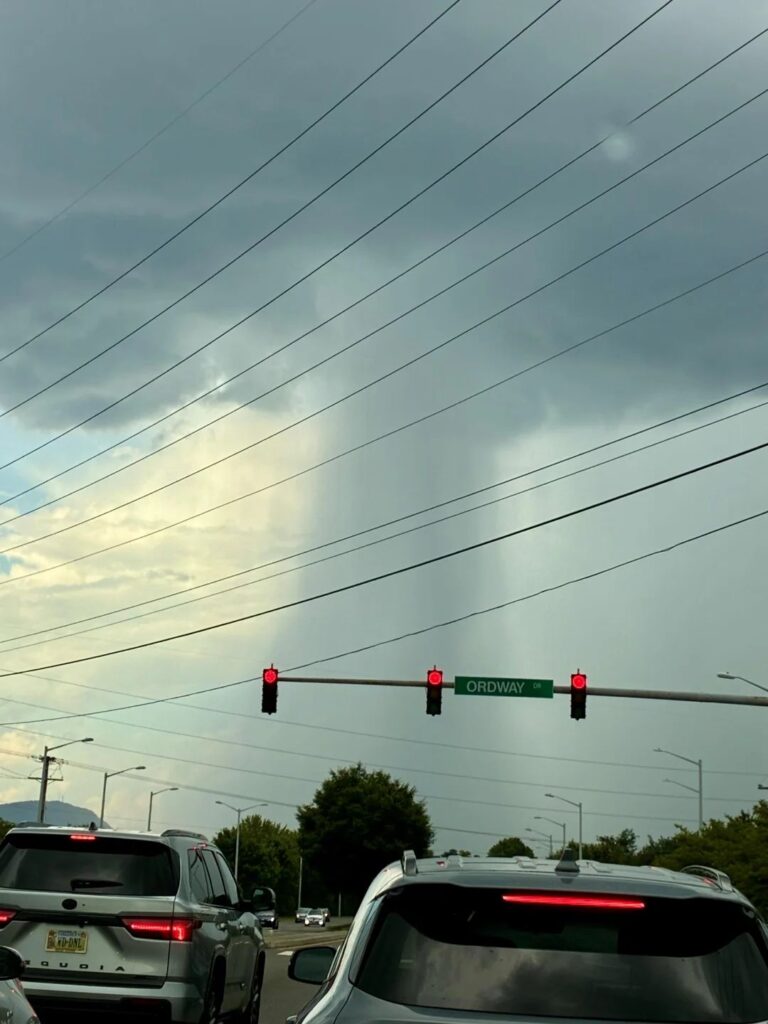
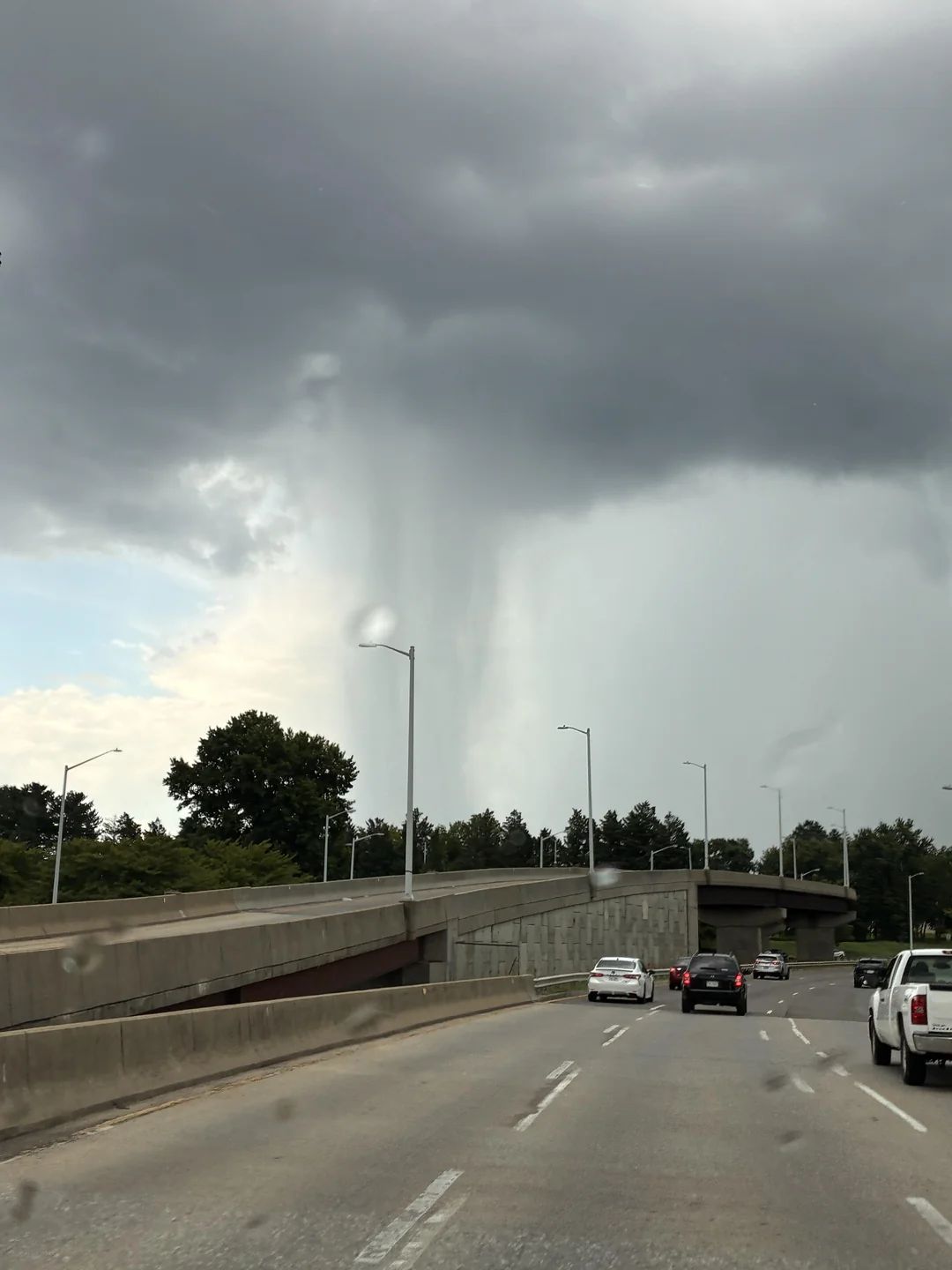
Day 21,006 – 570606050442
dwarf engineer, first pass, last pass
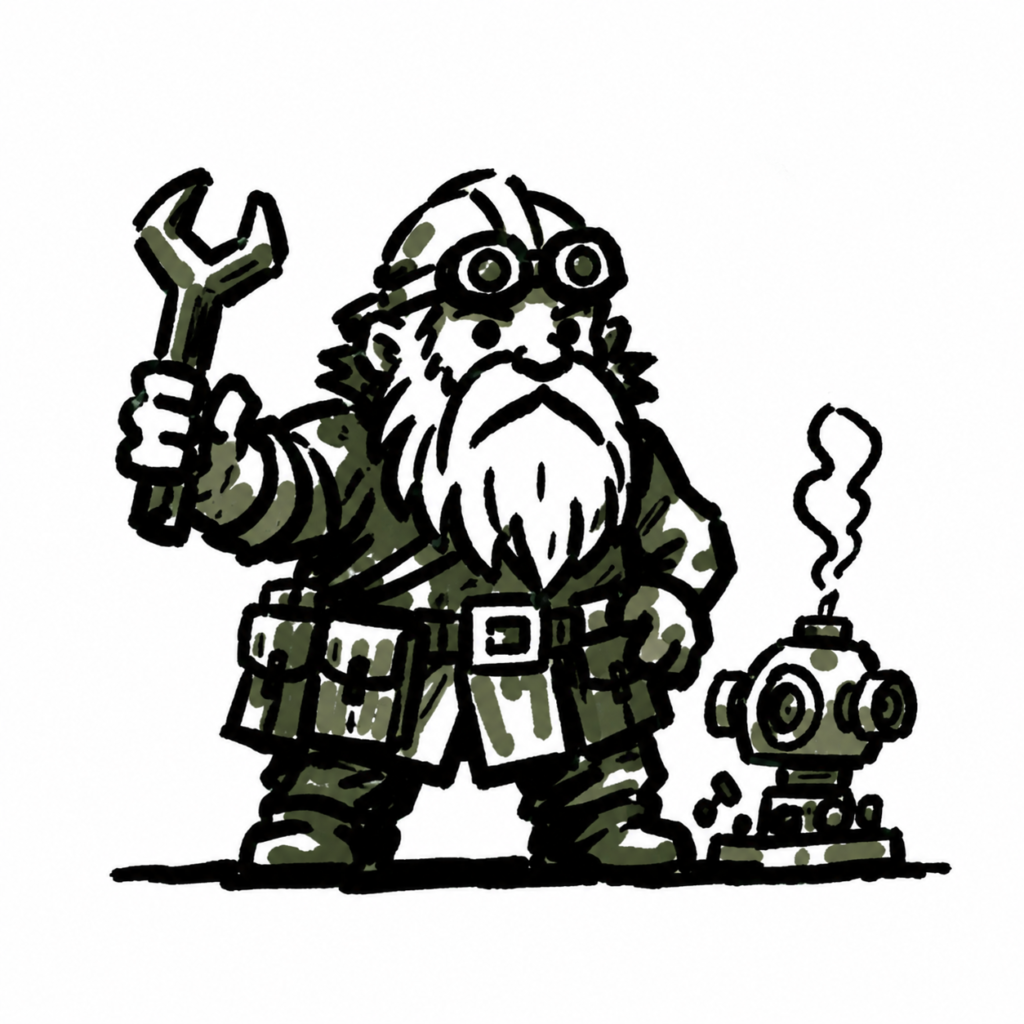
🧑🔧 Character’s profession: engineer
🔧 Tool details: wrench
🎨 Art style: digital markers
💬 Story behind the art: always loved playing dwarves, back in frp days. maybe my inner contrariness, but dwarf fighters and clerics were my go to when most of the others chose elves, magic users, rangers, thieves or assassins. (when not basic humans)

Deer interlude aug 3 2026
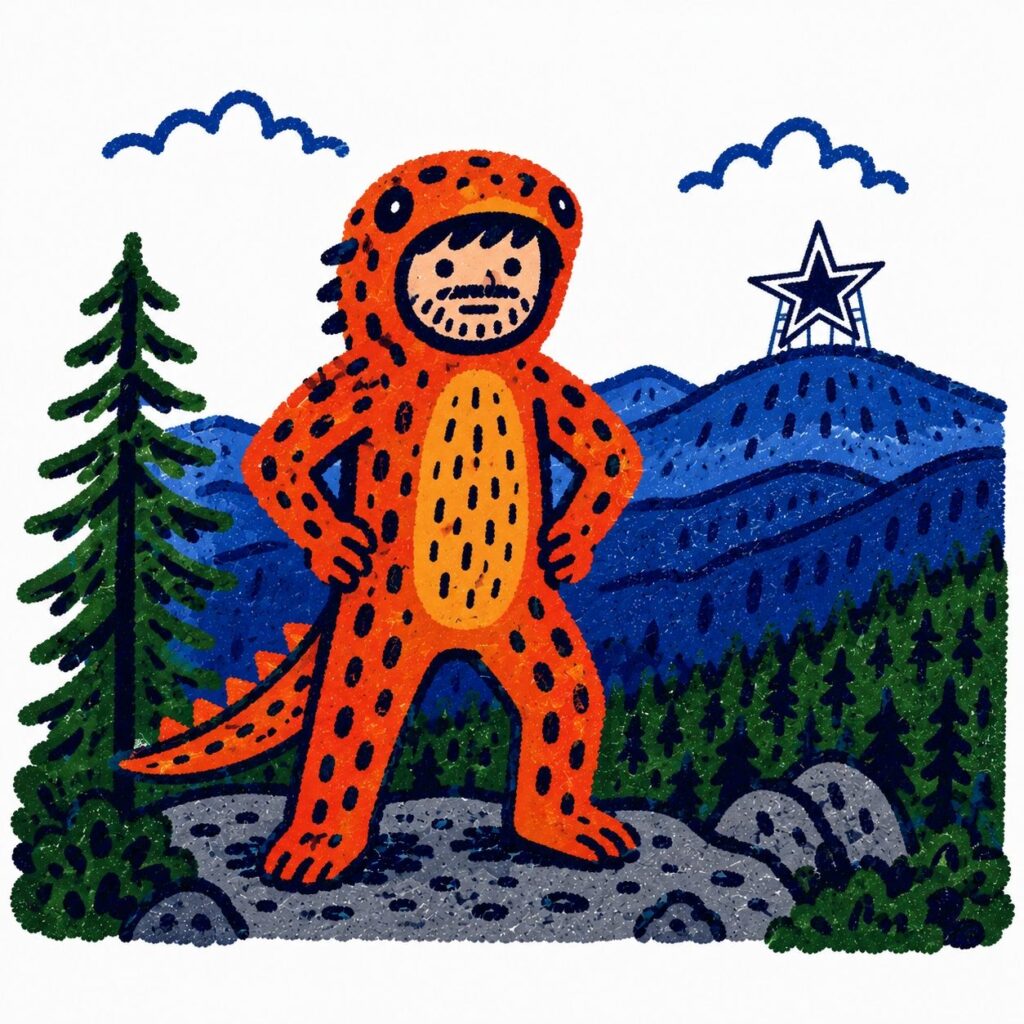






Costumed Heroes… and Villains… Are Appearing Across the Roanoke Valley
At first, everyone thought it was just another internet rumor.
A blurry photo near the Roanoke Star.
A shadow on the Greenway.
A figure perched high above downtown just before dawn.
Then came the videos.
Now… people are asking if the Roanoke Valley has its own superheroes.
The first to capture the public’s imagination was The Roanoke Raven. Dressed in midnight black with a purple mask, witnesses claim the mysterious guardian has been spotted watching over downtown rooftops before disappearing into the night. Some say they’re protecting the city. Others insist they’re simply waiting.
Not long after came The SALEMander.
Equal parts firefighter, athlete, and neighborhood legend, the crimson-clad hero has reportedly been seen racing toward danger rather than away from it. House fire? Flooded street? Cat in a tree? No one can prove anything… but people keep telling remarkably similar stories.
Then, circling overhead (or at least somewhere high enough to judge us all) is The Vinton Vulture.
Despite the intimidating name, locals insist this masked mystery has a knack for finding what others have lost. Missing pets. Missing wallets. Missing hikers. If something disappears, don’t be surprised if a dark-winged figure quietly points rescuers in the right direction before vanishing without a word.
Unfortunately…
Heroes rarely appear without villains.
Reports have begun surfacing of The Hollow King, a ghostly figure said to emerge from abandoned places and forgotten tunnels beneath the valley. Wherever he walks, lights flicker, echoes linger, and people suddenly remember stories they’d rather forget. Some believe he’s more myth than man. Others refuse to go looking.
More concerning is the arrival of The Roanoke Ravager.
Unlike the others, the Ravager doesn’t hide. He wants to be seen.
Witnesses describe shattered signs, overturned park benches, mysterious claw marks, and a booming laugh echoing through the mountains. Every appearance seems designed to test the city’s newest protectors.
Coincidence?
Performance art?
An elaborate social media campaign?
Or something stranger?
Authorities have no official comment.
Local photographers are suddenly carrying better zoom lenses.
And somewhere beneath the glow of the Mill Mountain Star, heroes and villains may already be choosing sides.
If you happen to see a caped figure disappear over a rooftop…
Don’t panic.
Just wave.
They might be on your side.
Hour 499,305
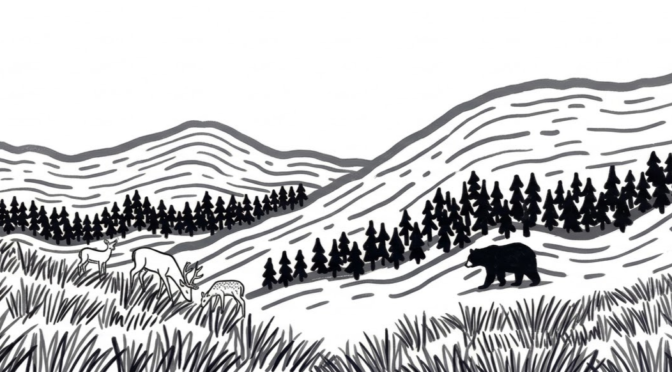
The critters that visit our back yard make me happier.
The world hurts a lot right now. I’m glad I can find joy in some things.
Virginia, it is our turn now. We are swearing in our new governor this weekend, a woman and a Democrat. These are both things that MAGA hates. As such, we have seen a rise in the number of ICE agents patrolling and seizing people. Document everything. Let your neighbors know if you see ICE. Be vigilant, be safe.
Seed 561113025751