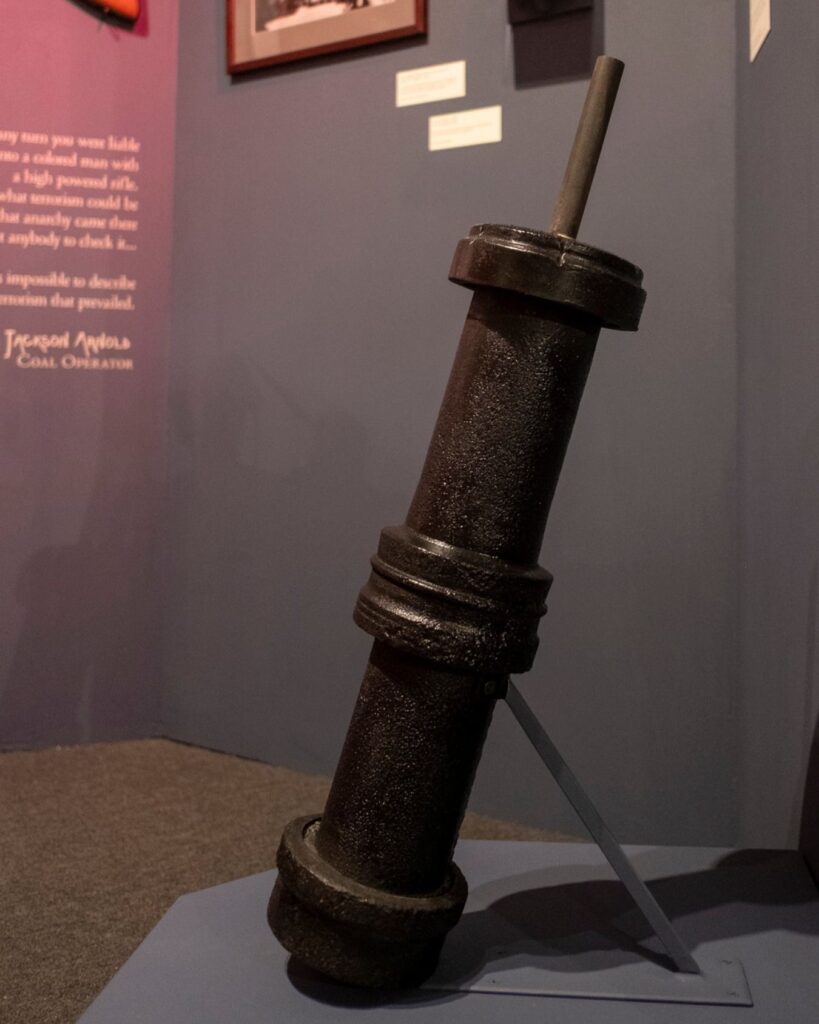
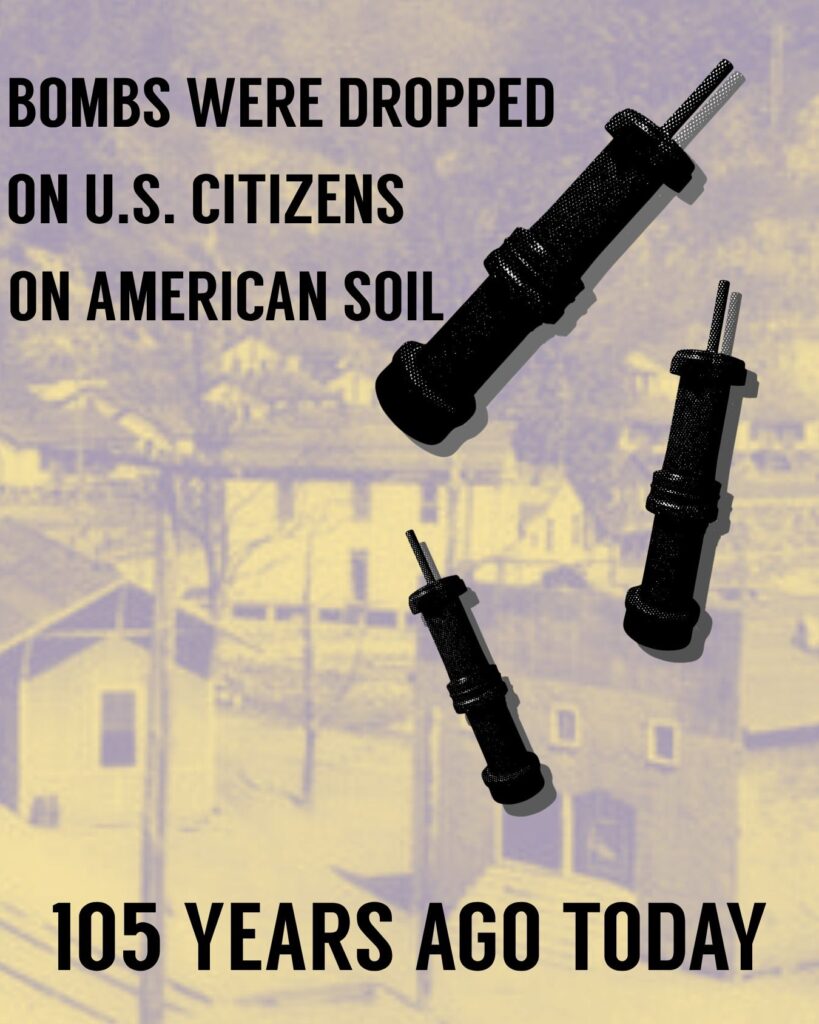
Today is the 105th anniversary of bombs being dropped on miners and their communities during the Battle of Blair Mountain.
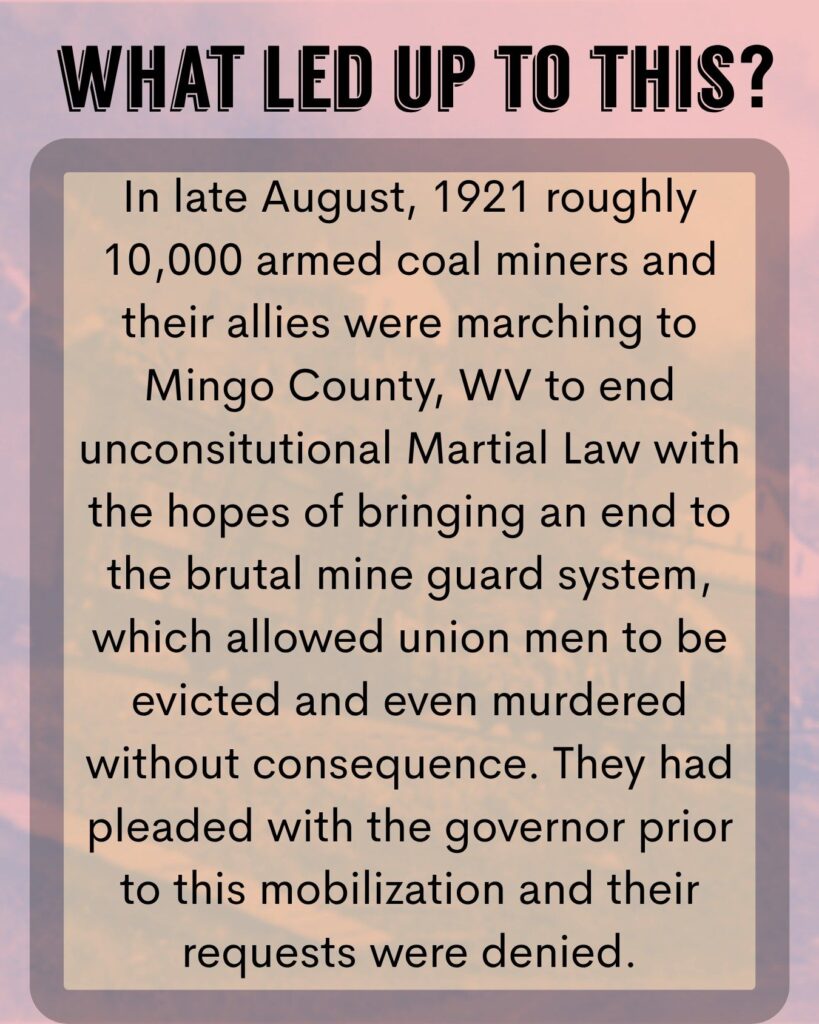
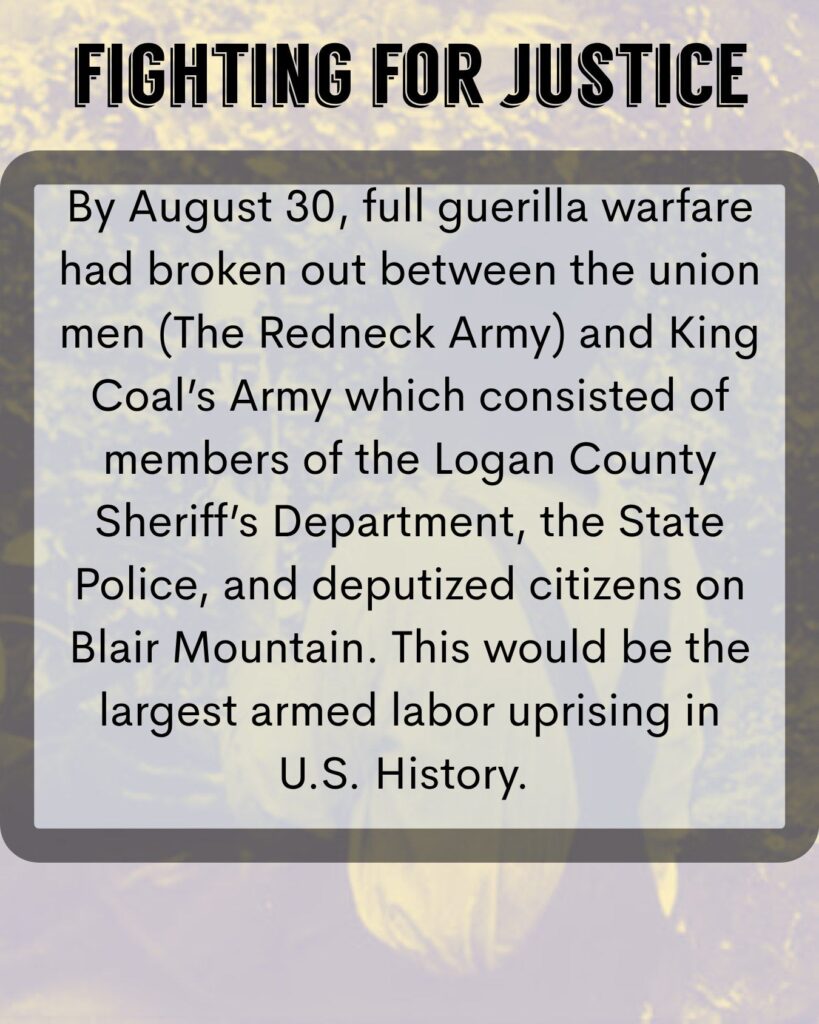
Back in late August 1921, the hills of Logan County, West Virginia, turned into a full scale warzone. Ten thousand striking coal miners, all wearing red bandanas around their necks, marched out to try to unionize the southern coalfields. They were just looking for basic dignity, but standing in their way was a heavily armed army funded entirely by the coal companies. What followed wasn’t just some minor labor dispute, it was a brutal five day battle. It remains one of the only times in American history where the civilian population was subjected to an actual aerial bombing on American soil.
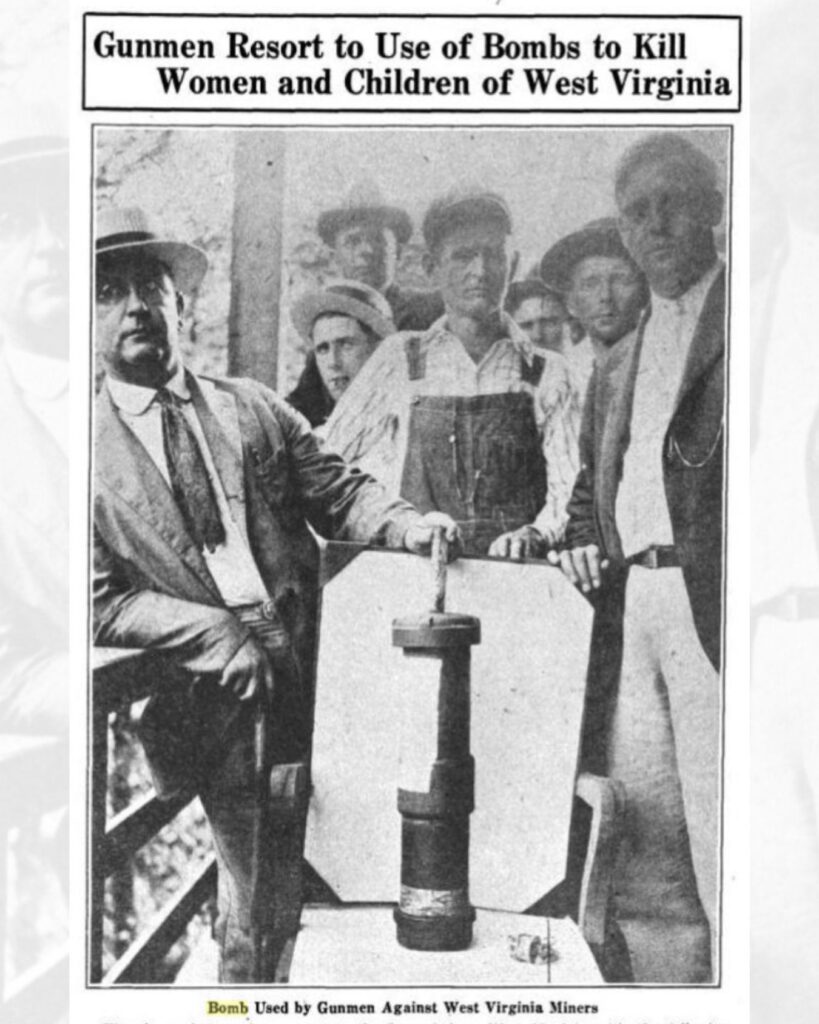
As the miners were advancing up Blair Mountain, Logan County Sheriff Don Chafin took to the air. His whole anti-union defense force was being openly bankrolled by the coal operators, and they chartered private civilian biplanes to use as makeshift bombers. Deputies sat in the cockpits and dropped homemade pipe bombs and surplus commercial explosives packed with shrapnel directly onto the miners’ trenches. While those crude munitions caused a lot more terror and confusion than actual mass casualties, it was still a terrifying escalation for a domestic labor struggle.
Things got so intense that President Warren G. Harding had to step in to suppress what the federal government viewed as a total insurrection. The U.S. Army deployed an entire squadron of military aircraft from Langley Field under Brigadier General Billy Mitchell. The planes patrolled the skies to conduct reconnaissance and make a massive show of federal power. Historical accounts show that both the private planes and the military forces introduced tear gas and gas canisters into the mix to flush the miners out of the heavy mountain foliage.
The arrival of the army and the planes completely broke the momentum of the battle. Many of those striking miners were actually World War I veterans who had just come back from Europe. They were totally willing to trade shots with corrupt company guards and local deputies, but they flat out refused to fire on the flag or the uniforms of the United States military. By September 4, 1921, the miners started laying down their weapons and heading home. The whole thing is a pretty stark reminder of exactly how far coal operators and local governments would go to crush labor rights. Those bombs dropped on the West Virginia hills didn’t just target the guys hiding out on the ridges, they completely reshaped the trajectory of the American labor movement for generations.